
Blaklash joins as co-owners of Willie Weston, heralding a new chapter for the brand and the First Nations artists at its heart
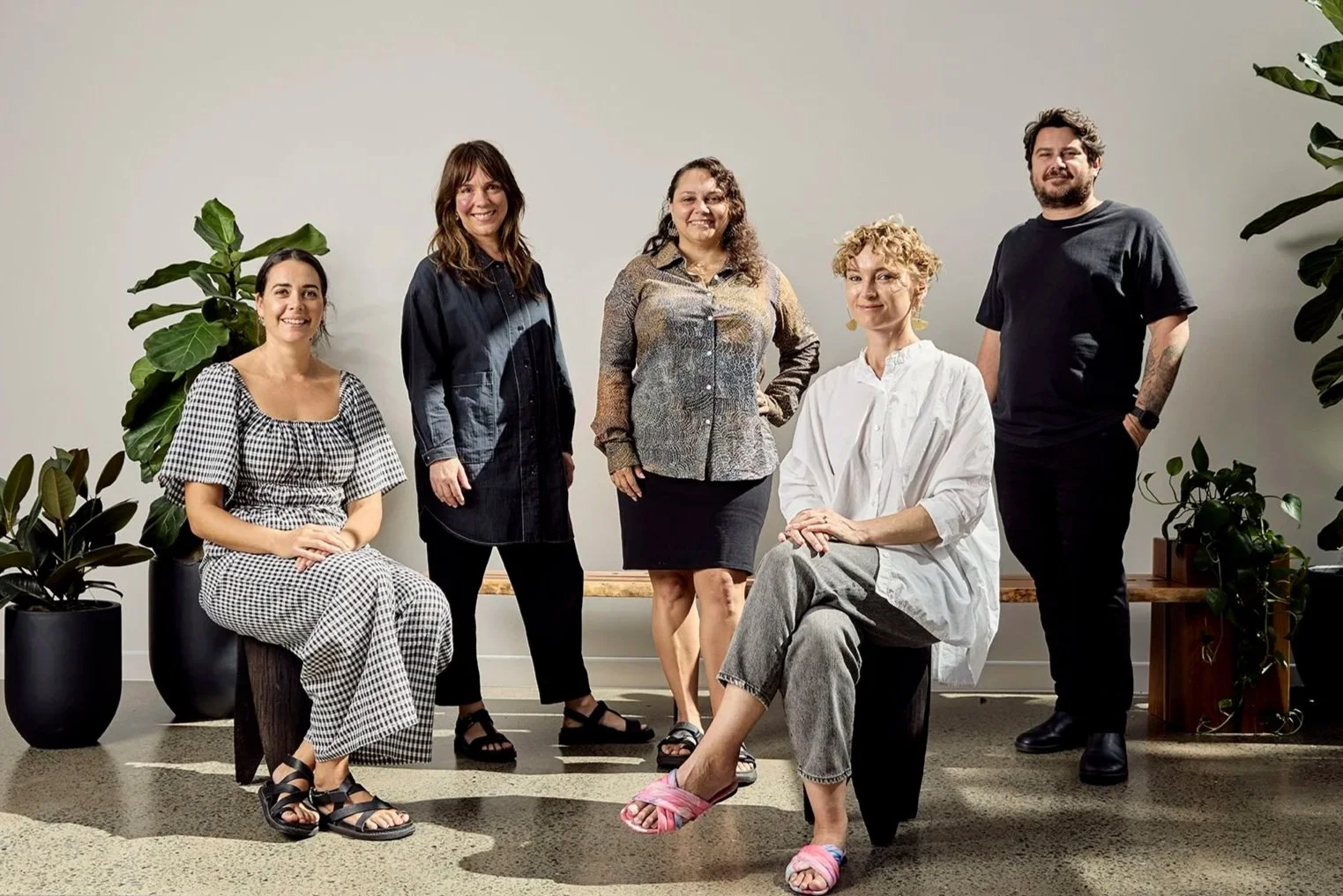
[L-R] Erin McDonald, Laetitia Prunetti, Amanda Hayman, Jessica Booth and Troy Casey. Photo: Josef Ruckli.
Willie Weston welcomes Blaklash as co-owners, bringing First Nations leadership
into one of Australia's most respected commercial textile brands
Blaklash Managing Director Troy Casey and Founder Amanda Hayman will join Willie Weston co-founders Jessica Booth and Laetitia Prunetti at the helm of the brand, which works exclusively with First Nations artists. It's the latest evolution in a brand growth story that began in Naarm (Melbourne) in 2015, when Jess and Laetitia, two non-Indigenous art curators, set out to build the market for First Nations textiles in commercial interiors.
Today, Willie Weston collaborates with artists from across Australia to create high-performance textiles for commercial, government and education settings. The range includes indoor, outdoor and drapery fabrics, as well as wall coverings designed for high-traffic environments. Working with architects, designers and private clients around the world, the brand has played a leading role in integrating First Nations art, design and storytelling into commercial interiors.
“Willie Weston began as a truly micro business,” Jessica says. “When we first started in 2015, our offering was seen by designers as extremely niche. We persevered because we believed in the artists we were working with and the need for their designs in our built environments. “Over the past decade, we've built ongoing scalable income streams for artists and created genuine impact for families and communities across Australia. I'm really proud of that.”
Blaklash is a 100% Aboriginal-owned and operated multidisciplinary design consultancy working across architecture, place, public art and strategy. As First Nations designers, curators and placemakers, the team uses design as a vehicle for cultural, social and economic change, partnering with Traditional Custodians, communities and project teams to deliver Country-centred outcomes.
The partnership formally brings First Nations leadership into the Willie Weston brand and is intended to expand opportunities for First Nations artists across the architecture and design sector.
“We had been conscious for some time about the importance of bringing First Nations knowledge and voices into the business. We didn’t know initially what form that would take, and it was really important that we had the right people to do that with. We’ve always been strong believers in First Nations agency, and it was a natural progression for us to evolve Willie Weston in this way. It’s an amazing and important next step for the brand.”
A natural evolution
Jessica says the conversations that led to the partnership had been years in the making. “We met Troy at an exhibition opening a couple of years ago and really hit it off,” she says. “We struck up a long-distance friendship and spent time getting to know Amanda and [Associate Director] Erin [McDonald] as well. Initially, we all just admired each other's work and contributions to the industry, but over time we began to talk about ways we might work together.
“We discussed various models, but in the end, it became clear that bringing Blaklash on board as co-owners of Willie Weston would really enable us to scale impact for artists by combining our skill sets and expertise, and take the business to the next level.”
“Willie Weston and Blaklash share the same values; championing First Nations artists and communities, and creating economic impact as a result,” he says. “One of the things we can bring to Willie Weston is the opportunity to collaborate with more artists in urban settings, alongside the incredible work the brand has already done with art centres around the country. That can only mean more opportunities for more artists.”
A shared commitment to impact for artists
Amanda says the alignment between the two businesses will set the partnership up to deliver for artists in a way neither could alone.
“We've always been admirers of Willie Weston,” she says. “They're industry leaders in translating Aboriginal art onto textiles and interior design in such a subtle, sophisticated and contemporary way.
“Together, we have the opportunity to create something really special: products that are beautiful, culturally grounded and commercially successful, while making sure that First Nations artists are at the centre of, and benefiting from, every step of the journey.”
Complementary strengths
Most commercial textile brands offering First Nations designs lack deep community engagement, and most cultural consultancies working with First Nations communities don't have the product development capability to take designs to market at scale.
Together, Willie Weston and Blaklash bridge that gap, combining strong community relationships, curatorial expertise and ethical artist partnerships with high-performance products that designers can confidently specify across commercial settings.
Willie Weston will continue to offer its existing collections, and the new team is currently developing a suite of designs to be released in the coming year. The partnership will also expand the brand's capacity for regionally specific custom design responses and embed First Nations knowledge at a strategic level across the business.
For Troy, the measure of the partnership's success will be felt by artists.
“Success looks like creating more impact and more economic opportunities for artists all across this country,” he says. “Blaklash has always been a business that creates platforms for First Nations artists and communities to tell their stories their way, and this partnership with Willie Weston will increase the impact we can create for those artists and communities.”
Ultimately, Jessica says the partnership is a model of what's possible when First Nations and non-Indigenous businesses come together with care.
“We hope people see the wonderful things that can happen when First Nations and non-Indigenous people and businesses come together to build genuine partnerships based on trust, respect, ethics and a commitment to really strong outcomes for artists.”